
We booked a TGV for a relative, but we swapped the first name and last name on the form. Either the original traveler can no longer travel, and someone else must take the train in their place.
In both cases, the question quickly arises: can we change the name displayed on the SNCF ticket? SNCF does not offer a standard function to transfer a ticket from one passenger to another. There are options available, but they depend on the type of ticket, the carrier, and when you take action.
SNCF Named Ticket: What Identity Checks Change in Practice
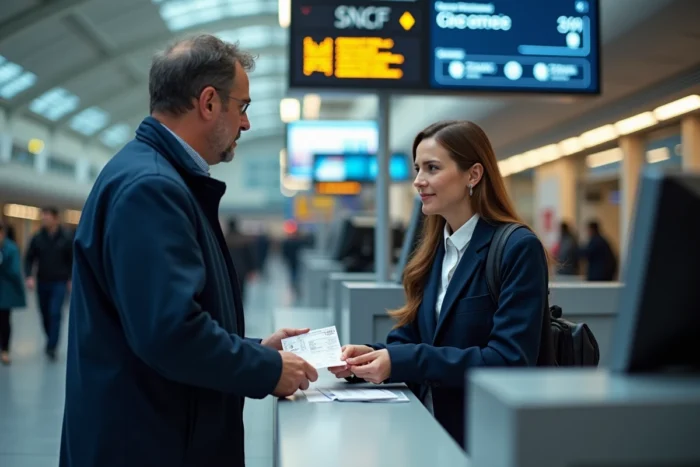
Not all SNCF tickets are subject to the same level of verification. On a TER, the conductor rarely checks the traveler’s identity. On a TGV or Intercités, the situation is different: the ticket is named, and the conductor may ask for an ID.
Since February 13, 2025, it is possible to present a digital identity card via the France Identité app during checks on board TGVs and Intercités. This detail matters: if the name on the ticket does not match the identity presented, the conductor has the right to consider the ticket invalid.
In practice, a simple typo (missing accent, forgotten hyphen in a compound name) often passes without issue. However, a first name and last name completely different from those of the passenger on board pose a real problem. This explains why the possibility to change the name on an SNCF train ticket is the subject of so much research: the margin for error is low on major lines.
Changing the Name on an SNCF Ticket: TGV, Ouigo, and Intercités Do Not Apply the Same Rules
SNCF encompasses several commercial services, each operating under its own conditions. None offer a “change name” button in the SNCF Connect customer area. The only official option remains to cancel the ticket (when possible) and purchase a new one in the correct traveler’s name.
TGV Inoui and Intercités
On these trains, the ticket is named. If you realize there is an error right after purchase, the most effective approach is to contact customer service quickly. Some minor corrections (swapping name/first name, typo) can be handled by phone, but responses vary on this point depending on the advisors.
For a complete change of traveler, you must go through an exchange or cancellation, depending on the fare conditions of the ticket:
- Flexible fare tickets (First, Business First) generally allow for a free exchange up to departure, which amounts to canceling and then rebooking in the correct name
- Discounted fare tickets (Prem’s, promotions) are often non-exchangeable and non-refundable, which blocks any modification
- Normal fare tickets allow for exchange with potential deductions, but again, this means rebooking, not transferring
Ouigo
Ouigo applies stricter conditions. Ouigo tickets are named, and exchange possibilities are very limited. Correcting a name error is not provided for in the online process. The only option often remains to purchase a new ticket if the initial fare does not allow for exchange or cancellation.
Alternative Solutions When Name Change Is Impossible
When you find yourself stuck with a ticket in the wrong name and rigid fare conditions, a few avenues are worth exploring before considering the ticket lost.
Contact Customer Service Before Departure
A call to SNCF customer service remains the first thing to do. Even if the standard response is negative, some advisors have leeway to correct a manifest input error. Having the file number, an ID, and proof of the error on hand facilitates the discussion.
Take Advantage of Exceptional Commercial Measures
In case of a major event (heatwave, strike, serious incident on the network), SNCF deploys temporary commercial measures that relax exchange and cancellation conditions. These measures sometimes allow for exchanges without fees or obtaining a full refund, even on tickets that are normally non-modifiable. Note: a ticket is not automatically canceled when a train is canceled; you must request the cancellation yourself via SNCF Connect or at the station.
Reselling Between Individuals for Non-Named Tickets
Some TER tickets are not named. In this case, reselling or giving the ticket to another traveler poses no practical problem. For named tickets, resale via third-party platforms remains a gray area: SNCF does not encourage it, and the new ticket holder risks refusal at the check.
Passenger Rights and European Regulation: What Applies to Trains
The European regulation on rail passenger rights governs the obligations of the carrier in case of delay or cancellation, but does not provide a right to change the name on a train ticket. Unlike air transport where some companies offer name transfers for a fee, the European rail sector allows each operator to set its own commercial conditions.
The Senior Advantage card, the Young Advantage card, or any other SNCF loyalty program do not change this situation: these cards are personal and linked to the traveler, not the ticket itself. They do not grant any additional rights regarding name changes.
For international journeys (Eurostar, Thalys, Renfe-SNCF), conditions vary by operator. Some allow for a name correction under strict conditions, while others apply the same restrictions as SNCF. Checking the general sales conditions of the relevant carrier before purchase remains the safest reflex, especially when booking for a third party.
The best operational advice remains to check the name entered before confirming payment. A ten-second re-read avoids a complaint procedure that can take several days, with no guarantee of results.