
The CPF finances training in oenology, but the access conditions have changed since 2024. Mandatory flat-rate participation, WSET certifications removed from the catalog, annual rights ceiling: the amount actually available for a wine training depends on several parameters that training organizations rarely detail on their pages. This article measures the gap between the displayed cost of the courses and what the CPF actually covers.
Out-of-pocket expenses for CPF and oenology training: what the prices don’t say
Since May 2024, any mobilization of the CPF is accompanied by a mandatory flat-rate participation (PFO), even when the accumulated rights cover the full price of the training. This PFO was set at 100 euros in May 2024, and then increased to 150 euros since April 1, 2026.
Job seekers are exempt from this fee. Employees whose employer or OPCO contributes to the training are also exempt. For all others, this amount is added to the total cost, regardless of the available CPF balance.
This point changes the calculation for anyone wishing to take a CPF oenology training: funding is never completely free, even with a sufficient balance. Organizations often display a “CPF eligible” price without mentioning this additional participation.
| Criteria | Before May 2024 | Since April 2026 |
|---|---|---|
| Mandatory flat-rate participation | None | 150 euros |
| Exemption for job seekers | Not applicable | Yes |
| Exemption if employer/OPCO contribution | Not applicable | Yes |
| Eligible WSET certifications | Levels 1, 2, and 3 | None |

WSET Certifications and CPF: eligibility removed
The WSET (Wine and Spirit Education Trust) trainings were the main oenology courses funded by the CPF. Levels 1, 2, and 3 were listed on Mon Compte Formation and represented a significant portion of wine training enrollments.
France Compétences no longer allows WSET funding via the CPF. No WSET offers should appear on the Mon Compte Formation platform. However, some organizations still mention this eligibility on their commercial pages, creating confusion for candidates.
In practice, oenology trainings still accessible via the CPF are limited to certifications registered in the Specific Directory (RS) or the RNCP. The scope has been significantly reduced.
Wine trainings still eligible for CPF
The courses that remain fundable share a common point: they lead to a certification registered with France Compétences. “Discovery,” “introduction to tasting,” or thematic workshop trainings generally do not meet this criterion.
- Certifications specific to certain wine schools (registered in the RS) remain mobilizable, provided their actual presence on Mon Compte Formation is verified at the time of registration.
- Long professional trainings oriented towards careers (wine merchant, wine advisor) backed by the RNCP retain their eligibility.
- Short modules on tasting or food and wine pairings, even if provided by a Qualiopi certified organization, are not eligible if they do not lead to a referenced certification.
Checking eligibility directly on Mon Compte Formation remains the only reliable method. The commercial pages of organizations do not always reflect the current state of the catalog.
Alternatives to CPF for financing oenology training
When the CPF does not cover (or no longer covers) the desired training, other funding options exist. Their accessibility depends on the candidate’s professional status.
Funding by OPCO for employees
An employee can request their OPCO (skills operator) if the training is part of the company’s skills development plan. The advantage: no flat-rate participation and partial or total coverage depending on the branch agreement. The constraint: the employer must validate the request, and the training must have a demonstrable link to professional activity.
For a wine merchant, a sommelier, or a restaurant employee, the justification is direct. For a passionate individual working in a completely different sector, the process is more complex.
France Travail aids for job seekers
France Travail offers complementary funding options to the CPF. The France Travail contribution can supplement an insufficient CPF balance. Job seekers also benefit from the exemption from the mandatory flat-rate participation, which reduces the actual cost of training.
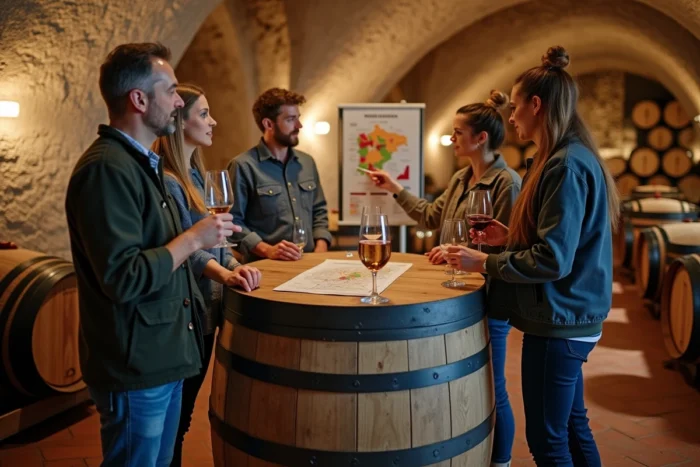
Choosing a certifying wine training: concrete selection criteria
The removal of WSET from the CPF reshuffles the cards. The choice of a certifying oenology training now relies on more stringent criteria.
- The certification must be registered in the RS or RNCP and visible on Mon Compte Formation, not just on the organization’s website.
- The organization must hold the Qualiopi certification, a necessary but not sufficient condition for CPF eligibility.
- The format (in-person, remote, hybrid) influences the cost and coverage. In-person trainings often include tastings with samples, a significant expense.
- The duration of the course determines the amount of CPF rights consumed. A short course may leave a balance for a subsequent complementary training.
The wine training market remains fragmented. No central aggregator lists all offers with their updated CPF status. Manual verification on Mon Compte Formation, course by course, remains the most reliable method to avoid committing to a course whose CPF funding may have been removed in the meantime.
The regulatory framework of the CPF evolves each year, and oenology trainings are directly affected by these adjustments. The mandatory participation of 150 euros, the exclusion of WSET, and the tightening of eligible certifications significantly change the budget to be planned. Before any registration, cross-referencing the Mon Compte Formation catalog with the current coverage conditions remains the only approach that protects against unpleasant surprises.