Renovating a condominium is not managed like an individual construction project. Between the majority rules in general assembly, the sequencing of technical lots, and the multi-device financial arrangements, each project requires a coordination that general guides underestimate. We will review the concrete levers and recent obligations that condition the success of a condominium renovation.
Collective DPE and multi-year work plan: the regulatory framework that structures the entire project
Any renovation strategy in a condominium now starts with a specific regulatory obligation. The collective DPE is mandatory for residential buildings whose building permit was issued before 2013, according to a staggered schedule based on the size of the condominium: from January 1, 2024, for condominiums with more than 200 lots, from January 1, 2025, for those with 50 to 200 lots, and from January 1, 2026, for those with 50 lots or fewer.
This diagnosis directly conditions the development of the multi-year work plan (PPT). The PPT establishes a ten-year work program, prioritizes intervention areas, and estimates budget envelopes. Without an up-to-date collective DPE, the PPT cannot be voted on in the general assembly, which blocks the entire decision-making chain.
A co-owner or a member of the board who consults the renovimmopro.fr guide for condominiums finds a clear sequencing of these regulatory steps, articulated with financing procedures. It is a concrete support for preparing the agendas for the general assembly and arguing before reluctant co-owners.

Coordination of financial aids: MaPrimeRénov’ Copropriété, CEE, and work funds
The financial arrangement remains the main bottleneck. We observe that the majority of projects that fail in the general assembly stumble over the remaining costs perceived by the co-owners, due to a lack of a consolidated presentation of the cumulative devices.
MaPrimeRénov’ Copropriété and CEE bonuses
MaPrimeRénov’ Copropriété finances energy renovation works voted by the condominium association. This device targets common areas and collective equipment (facade insulation, replacement of collective heating, ventilation). Energy savings certificates (CEE) complement this and can be negotiated directly with energy suppliers or through a delegate.
The challenge is to present the co-owners with a readable financing plan, item by item, before the vote in the general assembly. We recommend including in the notice a summary table cross-referencing each work lot with the mobilizable aids, the remaining costs per lot, and the payment schedule.
The work fund as a lever for anticipation
Since the ALUR law, the work fund is mandatory in condominiums with more than ten lots. Its minimum annual amount corresponds to a percentage of the projected budget. This fund does not alone cover a comprehensive renovation, but it constitutes a cash advance that reduces the one-time fund call and facilitates the passage in the general assembly.
- External thermal insulation (ITE) of facades: the most expensive item, but also the one that generates the most significant energy gain on the collective DPE
- Replacement of the collective gas or oil boiler with a heat pump (PAC): an operation eligible for CEE and MaPrimeRénov’ Copropriété, provided that the feasibility study is conducted in advance
- Renovation of ventilation (collective VMC): often neglected, it conditions the actual performance of insulation and indoor air quality
Role of the AMO in condominiums: an underutilized technical intermediary
Assistance to project management (AMO) is a device that most condominiums underutilize. The AMO intervenes from the diagnostic phase, helps draft the specifications, assists in consulting companies, and follows the construction site until completion.
The AMO is financially covered by MaPrimeRénov’ Copropriété when the renovation reaches a certain level of energy performance. This funding covers all or part of the service, making it accessible even to small condominiums with tight budgets.
In practice, the AMO also serves as a trusted third party between the property manager, the board, and the companies. In condominiums where distrust towards the property manager is high, the presence of an independent AMO facilitates the voting of works and reduces post-general assembly disputes.
Common mistakes in the sequencing of works in condominiums
Renovating a condominium does not mean stacking technical lots. The order of intervention has a direct impact on the final performance and budget.
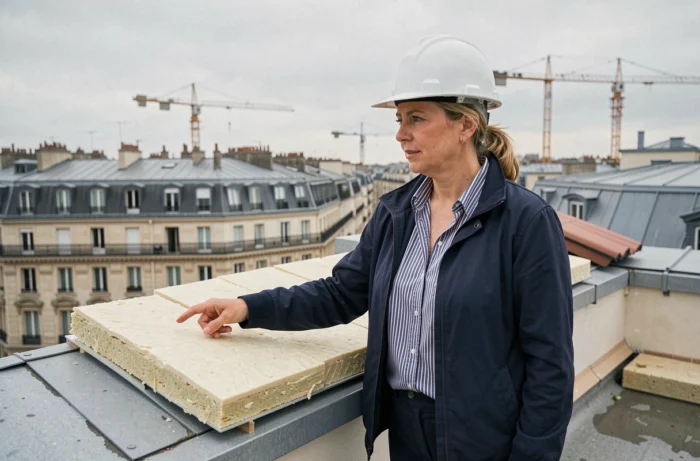
Replacing the collective heating system before insulating the building envelope is a classic mistake. The sizing of the new installation (PAC, heat network) depends on the actual thermal losses. Insulate first, size the heating later: this sequence avoids oversizing and the associated extra costs.
Another trap: voting for ITE without integrating the treatment of thermal bridges at the level of balconies and intermediate floors. Partial insulation can create condensation points and degrade the structure in the medium term.
- Conduct the collective DPE and the PPT before any vote on works
- Prioritize the insulation of the envelope before replacing heating equipment
- Systematically integrate ventilation into the insulation lot to avoid humidity-related pathologies
- Mandate an AMO from the diagnostic phase, not during the construction
The renovimmopro.fr guide details this sequencing with price estimates per item and field feedback. It is a useful preparation tool for boards that need to structure a coherent renovation program, defensible in the general assembly and compatible with the eligibility criteria for public aid.