Transforming an interior is no longer just about choosing a wall color or moving a sofa. Since 2025, energy renovation rules have reshaped what is possible (and profitable) to do at home. The practical home advice that works today takes this reality into account: every intervention, even decorative, can either improve or compromise the overall performance of a home.
Energy renovation and interior decoration: two projects now linked
Aesthetics and thermal performance fall under the same project when renovating a home. Recent regulatory constraints require them to be addressed together.
Since January 1, 2025, homes rated G on the energy performance certificate (DPE) can no longer be rented out. The ban will extend to homes rated F in 2028, and then E in 2034. For owner-occupiers as well as landlords, any intervention in the interior should integrate this trajectory.
Replacing single glazing with double glazing, insulating a wall from the inside before repainting it, or choosing a floor covering compatible with underfloor heating are decisions that fall equally under decoration and energy renovation. Resources like the home section of Les Conseils de Mélanie address these intersecting topics in an accessible way.
The MaPrimeRénov’ “major renovation” scheme has required since 2026 a gain of at least two DPE classes to be eligible. In other words, a simple coat of paint does not trigger any aid, but coupling a decor project with interior insulation can make the whole partially fundable.
Choosing interior materials: what decor trends don’t say
Magazines highlight materials for their visual appeal. Their thermal, acoustic behavior, or impact on indoor air quality is rarely documented.
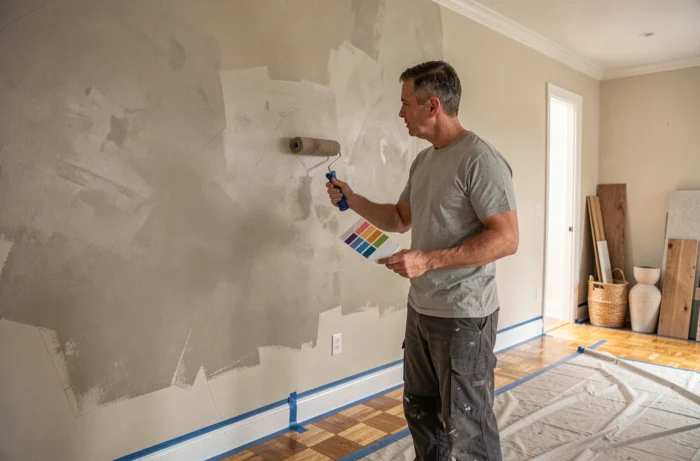
Wall coverings and insulation
Applying a lime plaster to a stone wall improves the hygrometric regulation of a room. Conversely, some decorative PVC cladding can trap moisture behind it and degrade existing insulation. The choice of finishing material has direct consequences on thermal comfort.
Bio-based paints and natural plasters (raw earth, lime, clay) are gaining ground in the 2026 trends. Their benefits go beyond aesthetics: they help regulate humidity and limit volatile organic compounds.
Floor coverings and thermal performance
A solid wood floor laid on joists creates an air gap that modifies the thermal behavior of the floor. Large format tiles glued to a screed conduct heat better, making them more suitable for low-temperature underfloor heating. These technical decisions affect the comfort experienced daily, well beyond the chosen style.
Lighting and room layout: high-impact visual levers
Among the interventions that truly transform the perception of a space, two stand out for their effort/result ratio.
The multiplication of light sources changes the ambiance more than a change in wall color. A single ceiling light flattens the volumes. Three to four light points placed at different heights (sconce, table lamp, pendant, reading lamp) create zones and provide a depth that paint alone cannot produce.
Several designers note that terracotta shades, sage green, and earthy tones dominate the 2026 palettes, in contrast to the white minimalism that prevailed in recent years. Warm lighting (color temperature around 2,700 K) better complements these palettes than the still widely used cool white bulbs.
- Favor adjustable temperature bulbs to adapt the ambiance according to the room’s use (work, rest, reception).
- Position at least one light source less than 80 cm from the floor to create a sense of depth in small spaces.
- Replace standard switches with dimmers, a modest investment that radically changes the atmosphere of a room.
Co-ownership and interior layout: unknown constraints
Decor content almost always targets owners of individual homes. Co-owners face additional constraints that few guides mention.
The collective DPE has become mandatory for co-ownerships of 50 lots or more since 2025, with a gradual extension to smaller co-ownerships in 2026. This diagnosis conditions the work strategy voted on in the general assembly.
A co-ownership rated E, F, or G must establish an increased work fund dedicated to energy renovation. This means that even a purely interior project (window replacement, insulation of private walls) can fit into a collective plan and benefit from shared funding.
- Check the DPE rating of the co-ownership before undertaking interior work: an individual project can sometimes be integrated into a less expensive collective project.
- Consult the co-ownership regulations for interventions affecting exterior joinery or radiators, even if they seem purely decorative.
- Anticipate calls for funds related to the multi-year work plan, which can reduce the budget available for a decoration project.
Prioritizing interventions: where to invest first
Faced with a limited budget, the temptation is to multiply small cosmetic changes. Available data suggests a different approach.
One well-handled item transforms an interior more than ten superficial adjustments. Insulating a cold wall in the living room and then painting it in a bold shade produces a double effect: improved thermal comfort and marked visual impact. The opposite (repainting a poorly insulated wall) yields a fleeting result, as condensation eventually degrades the finish.
The same reasoning applies to the kitchen and bathroom, two rooms where humidity, ventilation, and coverings constantly interact. Changing a countertop without addressing ventilation is investing in an element that will deteriorate prematurely.
The most sustainable decoration choices are those that consider the building’s envelope. A pleasant living interior relies on often invisible technical fundamentals, well before choosing a fabric or wall color.