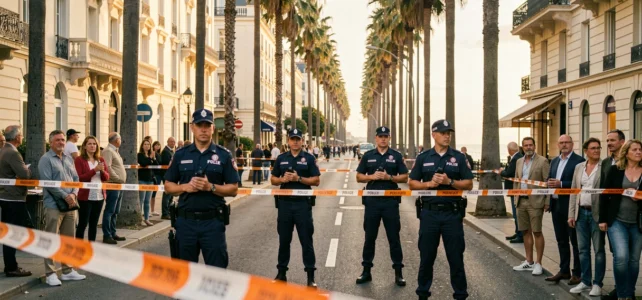
The bomb threat that targeted Cannes on August 15, 2026, mobilized several hundred law enforcement members and paralyzed part of the city center for several hours. What do the timeline and the means deployed reveal about how French tourist cities manage this type of threat during the peak summer season?
Means deployed and Vigipirate protocol: what Cannes mobilizes in response to a threat
Even before the alert was triggered, Cannes was already operating under the Vigipirate level “reinforced vigilance,” applicable across the entire territory. This level involves checks at access points to sensitive sites, increased police patrols, and the presence of plainclothes mobile units in areas of high foot traffic.
The shift to active crisis management added several layers of response. The Alpes-Maritimes prefecture activated a security perimeter, bomb disposal experts were dispatched to the scene, and intelligent surveillance cameras were used to guide ground teams.
| Response Element | Current Level (Reinforced Vigipirate) | Active Crisis Level (Alert Triggered) |
|---|---|---|
| Security Perimeter | Random checks at access points | Complete lockdown of the affected area |
| Mobilized Personnel | Usual patrol forces | Several hundred agents, including bomb disposal experts |
| Video Surveillance | Standard continuous monitoring | Real-time analysis with intelligent cameras |
| Searches / Checks | Random at event sites | Systematic across the entire perimeter |
| Canine Units | Occasional deployment | Immediate intervention on the suspicious package |
The account of the bomb threat in Cannes details the sequence of decisions made by the prefecture and the town hall during these tense hours. The gap between the two columns of the table illustrates the brutal escalation that this type of event demands from a city during the tourist season.
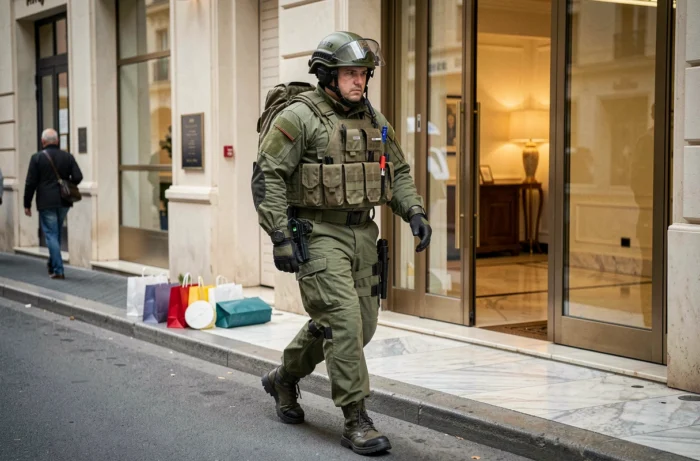
False bomb threats in France: a technically increasing phenomenon
The alert in Cannes is part of a documented trend that has been observed for several months. In July 2026, a 15-year-old was arrested in Yvelines after being suspected of 33 false bomb threats across the territory. The investigation revealed the coordinated use of platforms like Discord, VPNs, and virtual number services (like OnOff) to mask identity and location.
This profile is not isolated. It reflects a technical professionalization of the authors of false alerts, often minors, who exploit accessible digital tools to trigger mass evacuations remotely.
Tools used by authors of false alerts
- Encrypted messaging platforms (Discord, Telegram) to coordinate threatening calls or messages without leaving a direct trace
- Commercial VPNs that mask the IP address and complicate geolocation by investigators
- Virtual number services (OnOff, Hushed) that allow calls from disposable numbers, making the identification of the caller nearly impossible in real-time
This sophistication explains why each alert, even considered probably false, triggers a complete protocol. Law enforcement cannot calibrate their response based on probability: as long as the package or threat is not formally ruled out, the response remains maximal.
Criminal sanctions and legislative tightening against threats targeting cultural events
The legal framework applicable to this type of incident has significantly evolved between 2024 and 2026. Article 431-1 of the penal code, combined with the 2016 law on the freedom of creation, provides for penalties of up to three years in prison and 45,000 euros in fines for certain forms of obstruction to a cultural event.
The government has also sent circulars to prefects to strengthen the response whenever a show or festival is threatened or interrupted. This doctrine no longer clearly distinguishes between false alerts and real threats in immediate handling: the disruption itself constitutes the offense.
What the tightening changes for tourist cities
For a municipality like Cannes, this framework alters the budgetary and organizational equation of event security. Each alert mobilizes resources whose costs are borne by the state and the community, without a guarantee of rapid reimbursement.
The mayors of large tourist municipalities find themselves on the front lines. They must coordinate their municipal police with national forces, manage crisis communication with residents and tourists, and justify traffic restrictions to merchants.
- Obligation to maintain an updated municipal safeguarding plan, integrating threat scenarios for cultural sites
- Enhanced coordination between municipal police, national police, and bomb disposal services, with regular exercises
- Responsibility of the mayor for the immediate information of the population via alert channels (sirens, SMS, municipal applications)
- Financial pressure on municipal security budgets, while state funding often lags behind actual needs
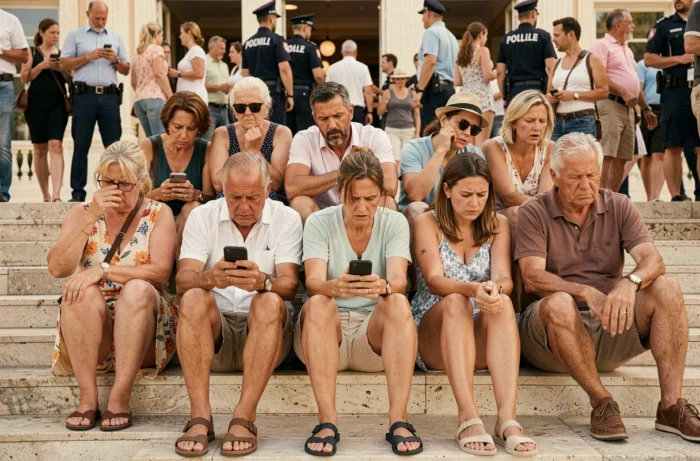
Cannes on August 15: what the timeline reveals about response times
The lifting of the alert was announced around 3:15 PM according to France 3 Côte d’Azur. This delay, of several hours between the initial report and the confirmation that the threat was ruled out, corresponds to the standards observed during similar incidents at large-scale sites.
The unavoidable time is explained by the technical sequence: securing the perimeter, transporting the bomb disposal team, inspecting the suspicious package with robotic or canine means, and then analyzing before restrictions can be lifted. Shortening this delay without compromising safety remains impossible with current protocols.
However, institutional communication has gained speed compared to incidents in previous years. The social media of local authorities and France 3 Côte d’Azur disseminated verified information during the operation, limiting the spread of rumors.
The alert on August 15 in Cannes illustrates an operational paradox specific to French tourist cities. The escalation of security measures and the legal framework does not prevent the multiplication of incidents, driven by increasingly accessible digital tools. The human and financial cost of each false alert weighs on municipalities that simultaneously host hundreds of thousands of visitors and must ensure the continuity of their cultural events.