
Decree No. 2025-1267 of December 22, 2025, has modified the list of municipalities classified as tense zones, with direct effects on residential leases signed or renewed since its entry into force. This reclassification affects thousands of municipalities across the metropolitan territory. For tenants as well as landlords, the issue is not abstract: notice periods, rent at re-letting, tax on vacant housing – everything depends on the classification of the municipality where the property is located.
Classification as a tense zone: a communal effect, not intra-communal
A point that most guides overlook: the classification applies to the entire municipality, without subdivision by neighborhood. If your municipality appears on the list attached to the decree, every residential lease within its territory is affected, whether the housing is in the city center or in the suburbs.
This communal logic simplifies verification. You just need to know the name of the municipality of the housing and compare it to the official list published on Légifrance or Service-Public.fr. All the necessary information to determine if you are affected is summarized on the Immobilier Hebdo website to discover with up-to-date regulatory references.
However, the classification as a tense zone and the rent control mechanism in the strict sense (capping by prefectural order) do not always cover the same areas. A municipality can be in a tense zone without the experimental rent control being active there. These two mechanisms follow distinct timelines and texts.
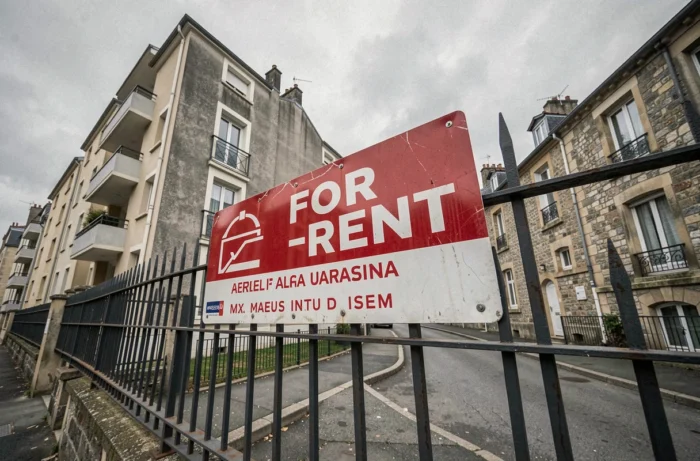
New municipalities in tense zones: when do the effects apply to existing leases
The entry of a municipality into the list does not suddenly disrupt ongoing contracts. The effects of the new classification are not retroactive on existing leases. Specifically, a lease signed before the publication of the decree continues to produce its effects according to the rules that prevailed at its signing.
The new provisions will apply at the next lease renewal or at the next re-letting. For a tenant in place, the reduced notice period of one month only becomes enforceable from the moment the classification is effective and the notice is given after this date.
This timing changes the answer to the question “are you affected?”. A landlord whose property is located in a newly classified municipality does not have to immediately modify the conditions of the ongoing lease. However, they must anticipate the consequences for the next rental:
- The rent at re-letting will be capped: it cannot exceed the last rent charged to the previous tenant, except for improvement works or manifest under-evaluation.
- The tenant’s notice will change from three months to one month, without any particular justification required beyond the location in a tense zone.
- The housing falls under the scope of the tax on vacant housing if the property remains unoccupied for more than twelve months.
Tax on vacant housing in tense zones: the “two-in-one” mechanism of 2026
The classification as a tense zone is not limited to notice periods and rents. The affected municipalities fall under the scope of the tax on vacant housing, a mechanism referred to as “two-in-one” by the Banque des Territoires.
The principle: a property vacant for more than twelve months in a municipality classified as a tense zone is subject to a tax with a rate of 17% in the first year and 34% thereafter. This is no longer a weak signal. For a landlord who leaves a property unoccupied, the tax bill becomes a real management parameter.
Newly classified municipalities thus see this tax appear without the need for a local vote. The classification as a tense zone is sufficient to trigger the application of the mechanism. Owners of vacant properties in these municipalities should quickly check if their property falls under the scope of application.
Who is actually exposed to this tax
The tax targets habitable properties that are deliberately left empty. A property undergoing major renovations, a property for sale without finding a buyer, or a property occupied seasonally may, under certain conditions, escape the mechanism. The available data does not allow for conclusions about the actual collection rate of this tax in recently classified municipalities, but the legal framework is established.

Rent evolution control: extension until July 2027
The rent evolution control mechanism has been extended for the period from August 1, 2026, to July 31, 2027. This mechanism, distinct from the experimental capping by prefectural order, applies in all municipalities in tense zones.
At re-letting, the landlord cannot freely set a rent higher than that of the previous occupant. Two exceptions exist:
- Significant improvement works have been carried out since the departure of the last tenant.
- The previous rent was manifestly under-evaluated compared to rents charged in the neighborhood for comparable housing.
Outside of these cases, the rent is frozen at the level of the previous lease, legal indexing aside. For landlords who were counting on a re-letting to adjust their rent to market prices, the classification as a tense zone closes this possibility.
Reduced notice in tense zones: what the tenant must mention
The one-month notice in tense zones is automatic, but the tenant must still mention the reason in their notice letter. The reference to the classification of the municipality as a tense zone must be included in the letter, along with the indication of the applicable decree.
A notice that does not specify this basis remains valid, but the landlord can contest the reduced duration and demand compliance with the three-month notice. In practice, attaching an excerpt from the list of classified municipalities or citing the decree number is sufficient to secure the process.
The classification as a tense zone does not change the landlord’s notice, which remains six months for an empty property and three months for a furnished property, regardless of zoning.
The list of classified municipalities evolves by decree, without a fixed calendar. Checking the status of one’s municipality before each lease deadline remains the most reliable precaution, both for the tenant and the owner.